From carve-out complexity to control:
How NG Nordic delivered an IT integration under budget and ahead of schedule
When NG Group joined forces with Fortum Recycling and Waste, the owner’s ambition was clear: integrate fast, minimise business disruptions, and create value early. The challenge was the scope: multiple parallel IT projects, tight transition timelines and an organisation in the middle of change.
The merged company, NG Nordic, partnered with Sofigate to lead the IT integration as one, coordinated programme and turn complexity into control.
The challenge
NG Nordic needed to fully separate the Recycling and Waste business unit from Fortum’s IT environment.
With a tight TSA (transition service agreement) schedule, multiple interdependent projects and limited internal capacity, the risks were clear: delays, costs and disruptions needed to be avoided.
The solution
Together, Sofigate and NG Nordic established an IT program management office (IT PMO) to create structure, strengthen governance and ensure business-led decision-making throughout the integration.
By synchronising projects, creating shared roadmaps, and ensuring business-aligned reporting, the transformation was controlled and transparent.
The results:
NG Nordic exited TSA one month ahead of schedule, avoided major business disruption and generated major cost savings while delivering one of the most complex IT integrations in the company’s history.
Day 1: where the story began
Back in late 2024 Fortum divested its Recycling and Waste (R&W) business, selling it to an investment company called Summa Equity. They merged the R&W business with another company in their own portfolio, NG Group. That became the birth story of a new, joint company: NG Nordic.
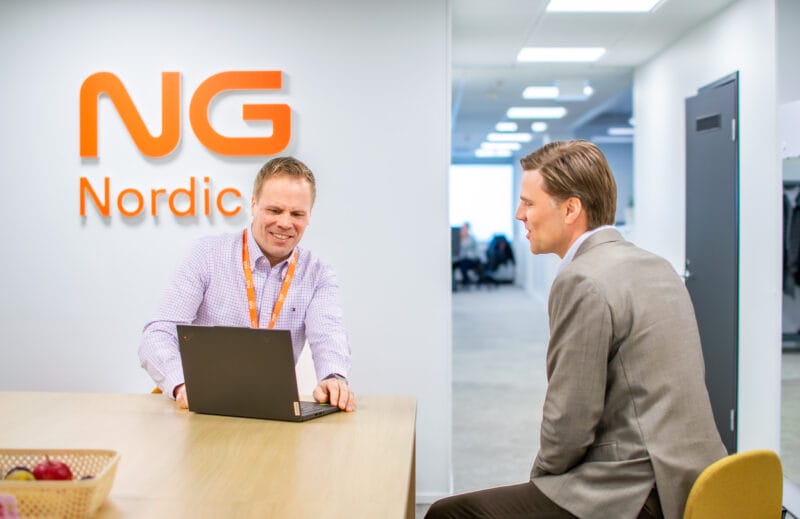
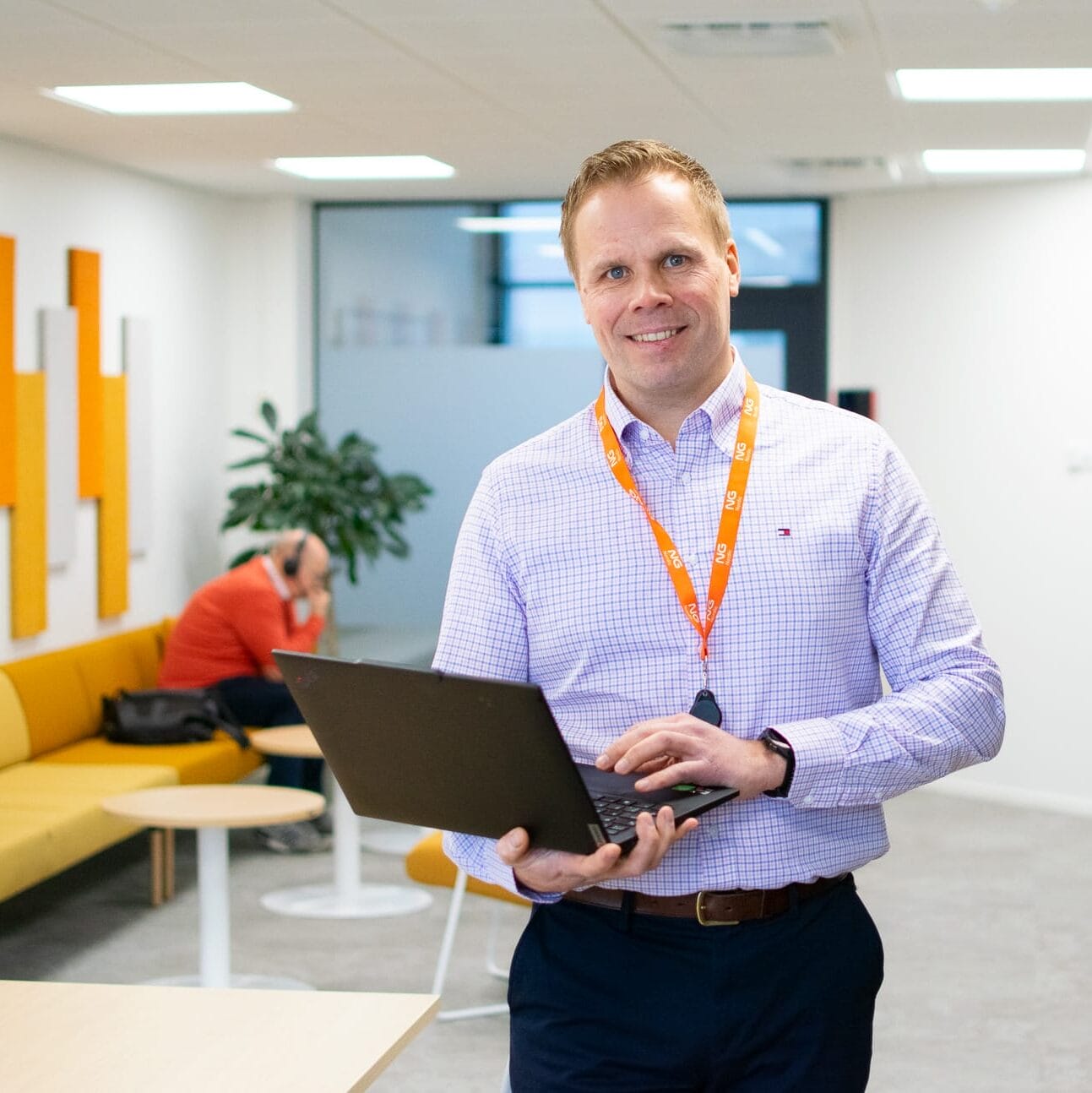
“This transaction was about creating long-term value, not just completing a deal,” says Tuomas Tommola, leader of the integration program at NG Nordic. “Executing the carve-out and integration in parallel without disrupting the business was essential for staying competitive while carrying on our sustainability commitments.”
For the separation to happen, NG Nordic needed to carve out the entire R&W’s technology landscape from Fortum. The IT environment included several business areas and a wide range of applications, integrations, services, devices and end-user environments that had to be transitioned, rebuilt, or replaced. Access to information was limited, timelines were tight and priorities evolved as the programme progressed.
“It was not at all clear in the beginning how this would eventually look. We had to move forward with incomplete information and build clarity along the way” Tommola notes.
From moving pieces to a clear direction
To succeed, NG Nordic realised they needed someone to align the moving pieces and build a structure that would keep the integration program on track. Enter Sofigate: a team of experts were brought in to strengthen IT leadership capacity and expertise for managing a complex integration.
“What was clear early on was that we simply did not have enough internal capacity to run this kind of IT project portfolio on our own,” Tommola explains. “We needed a partner who had done this before and knew how to keep many moving parts under control – from coordination and leadership to communication and a shared understanding of what the change meant for every part of the organisation.”
A central IT PMO was established to bring structure and transparency to the integration work, including:
- A consolidated transformation roadmap
- A financial tracking model
- Templates for progress reporting and dependency management
- A unified program kick-off for all projects
- A consistent meeting cadence with scrums, weekly meetings, and steering groups
- Structured communications and change management support
The IT PMO comprised of a team of experts vital for the project’s success: PMO lead, enterprise architect, testing lead, communications expert, Jira expert, project managers. The team evolved as the program proceeded, for example with a later addition of a training lead.
“Creating trust and working closely together with NG’s team was essential in the program,”
says Mikko Saari, VP of BT Integrator at Sofigate. “This was not a traditional IT programme. In M&A and carve-out situations, timelines, scope and decision-making work very differently, and execution requires experience from exactly these kinds of transformations.”
This approach ensured common governance, synchronised timelines and made dependencies between projects visible: NG Nordic owned the objectives and the direction, Sofigate enabled it to happen. The projects – including several vendors, internal IT resources and business stakeholders – were actively involved, making sure that IT decisions supported real operational needs.
From first milestone to making course corrections
The first major turning point came in late spring, when NG Nordic, with the help of a basic IT provider, completed a large-scale identity and device migration.
“I honestly did not believe it would go that smoothly,” Tommola admits. “For me, it was a huge relief. That moment made me realise that this integration would actually succeed.”
The milestone boosted confidence across the organisation and proved that even larger changes could be delivered without major disruption to daily work.
As the programme progressed, it became obvious that success required a clear visibility to each project’s process. While cost tracking was strong, progress reporting initially lacked the clarity needed for confident decision-making.
“We had to be honest about what was not working,” says Tommola. “Once we raised the issue, the team quickly adjusted the way progress was tracked and things improved fast. The important thing was that we talked about it openly and fixed it.”
With clearer reporting and tighter follow-up, leadership was able to intervene where needed and stay hands-off where projects were on track – keeping momentum high without unnecessary control.
Jumping on to the fast-track
By early summer, confidence in delivery had grown to the point where NG Nordic assessed the possibility of exiting TSA earlier than planned. After careful review of progress and risks, it was decided that the TSA agreement could be terminated in late fall, one month ahead of schedule.
“That was only possible because we had real visibility and strong reassurance from the project teams,” Tommola says. “One month may not sound like much, but financially it made a big difference.”
After the summer holidays, the main focus was on delivering key projects on time. With several interdependent systems going live parallelly, the focus shifted to alignment, testing, training and communications.
“With several go-lives in the fall, of course there were some minor issues. But overall, we kept the focus on the big picture, and that ensured we made it in time to exit the TSA with the fast-tracked schedule.”
A recipe for a successful integration
The early exit translated into major direct cost savings, and enabled the organisation to focus fully on its future operating model.
Despite the scale of change, business impact was kept deliberately low. While some temporary delays occurred – for example in invoice processing – core operations continued without major disruption.
“Considering the size of this programme, the issues were small,” Tommola reflects. “The business did not suffer in any meaningful way, and that is a real achievement in a project like this.”
With focus, structure and alignment, NG Nordic managed to complete the IT integration:
- One month ahead of schedule,
- Under budget,
- With no major business disruptions, and
- Ensuring strong digital foundation for the future
Exiting the TSA earlier translated into major direct savings in TSA costs, and even more from the use of external resources. The carve-out was delivered under budget, and the business continued without major disruptions. All business-critical systems and applications were transitioned without major issues or affecting the daily business or work.
“In a programme like this, collaboration is not a value statement, it is a requirement for execution,” Mikko Saari concludes. “Fast decisions and constant adaptation were essential, and that only worked because NG and Sofigate operated as one team with full transparency.”
With the carve-out completed and the major components of the IT landscape stabilised, NG Nordic is now fully equipped to continue its journey as a joint unit. The project not only delivered immediate financial benefits but also created clarity, structure, and a stronger internal capability for managing future transformation initiatives.
The basis of a great partnership: a common goal
For NG Nordic, one of the defining characteristics of the collaboration was Sofigate’s mindset: focused on reaching the goal, not extending the journey.
“There was never a sense that Sofigate was just trying to create problems to sell more work,” Tommola says.
“The goal was clear from the start – get this done, and get it done right.”
Reflecting on the programme, Tommola sums it up simply:
“This was a tight, shared push towards a common goal. We were in the same boat, even when everyone did not always agree on the route.”
Want to know more?
We’re here to help you transform your business – contact us!