A major transformation is also a learning journey
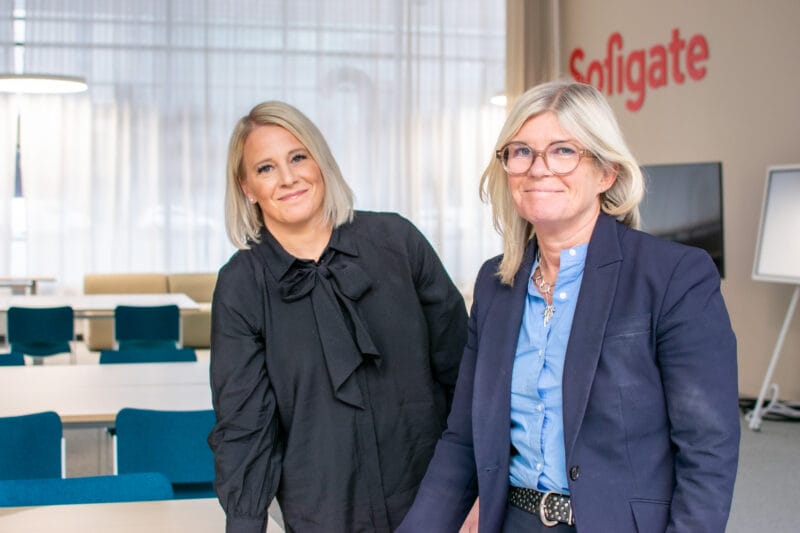
The ERP transformation at Neste was not only a business transformation but also a comprehensive learning journey for everyone involved. Experienced project managers Kirsikka Pohjala and Sanna Linden share how the project succeeded.
Our collaboration with Neste began in 2016. Over the years, it has steadily deepened, with more than 250 Sofigate’s employees contributing in leadership and expert roles across various initiatives. One of the cornerstones of success has been the Competence Partnership model, which ensures that every Sofigate employee is ready from day one to take full responsibility in their role within the Neste organisation.
The largest undertaking with Neste was the ALVAR (Asset Lifecycle Value Realisation) transformation project that replaced the company’s legacy asset management and investment systems. The project harmonised operating models and completed the change with a modern SAP ERP system – streamlining resource and asset management, improving the efficiency and transparency of investment projects, enabling modernisation of production processes, and integrating more seamlessly with the company’s other systems.
Scale like no other
The scale of the project was exceptional. Spanning more than four years, the transformation covered production plants in Finland, the Netherlands, and Singapore. In scope were 27 different systems, 128 business processes, and 3,800 end users. Altogether, 970 internal and external professionals, along with around 100 suppliers, contributed to the work. The project involved 300 integrations, 250 process changes, and more than 3,200 hours of training.
In projects of this magnitude, smooth collaboration and strong project management are critical. Sofigate’s role was to represent Neste and to ensure, together with the Neste team and the main IT Project Integrator, that the project ran smoothly with respect to schedule, scope, and costs. At peak, up to 15 Sofigate employees were engaged in different roles in the project. Alongside Neste’s key people and the main IT Project Integrator, the core team included a project manager, change manager, training lead, deployment lead, and area-specific experts.
We also managed other external partners, bringing in additional expertise to critical areas of the project.
Clear ownership, unified team
In large projects with multiple vendors, companies often feel tempted to delegate key decisions to their technology partners. For ALVAR, however, the principle was clear: ownership of the project would remain with the client organisation from start to finish.
Successful transformation requires decisions to be made on business terms, as the ultimate goal is to improve business outcomes. Neste’s business leadership owned the project and worked in close partnership with technology experts throughout. This ensured seamless collaboration across all units and departments, as well as smooth integration of systems and processes. As the project progressed, ownership naturally shifted to Neste businesses where new technologies and ways of working were being adopted.
With clear ownership and a core team united by shared goals, all participants – regardless of background, employer, or location – could operate as one team. This also included 3rd party representatives in a multivendor environment. Success was driven by every professional aiming at a shared outcome without silos getting in the way. This was one of the main goals for the project from the start and one of the main reasons why the project became the success story it was.
The best possible expert was always chosen for each task, whether from Neste or a partner company. Challenges were met with quickly assembled task forces, who could provide proven best practices. Adopting a shared working culture across a global network required practice and clear ground rules. Meetings and communications respected time zones and cultural differences, were carefully planned, and kept within agreed time limits.
Clear goal, flexible priorities
From the start, the end goal of the ALVAR project was crystal clear, but the project’s priorities had to shift along the way. Initially, scheduling was the main focus. Thanks to a flexible leadership model, however, focus could later move to quality as that became critical. Sofigate’s Business Technology Standard provided a solid foundation, ensuring consistent quality from every Sofigate employee in any role, and guiding the application of best practices at each phase of the project.
Transformation always requires rethinking, especially in a long project with more than a dozen deployment phases. Each step deepened everyone’s understanding of how business and technology interact and create opportunities. Lessons learned were openly shared across the ALVAR project, particularly as execution and ownership shifted to different parts of the Neste organisation. This way, competence grew inside the company and expertise was strengthened rather than lost.
Real benefits, face-to-face encounters
Systems are built to serve business goals, but real benefits are only realised through the actions of end users. In ALVAR, 3,800 end users – nearly one-third of them external to Neste – were impacted. They took part in more than 700 training sessions, totalling over 3,200 hours.
Training was not only about how the systems and processes worked, but also about how they supported the company’s business. On an individual level, this meant concrete examples of how the new operating model changed daily work and opened opportunities for growth.
That’s why face-to-face encounters were prioritised over purely digital training formats. The best motivation came from helping each end user understand how the transformation would ultimately improve their own work. A strong, well-functioning global key user network was central in bringing change to everyday operations.
Mutual learning
Large-scale transformation projects – often lasting years – inevitably change how all participants think and work. Although the project has now been completed and handed over to Neste’s business operations, the responsibility continues in ensuring seamless services around the new system landscape, processes, roles, and operating models.
The client organisation and its people learned new ways of working through technology. At the same time, participation gave all partners the opportunity to see things differently.
Today, we are in a fortunate position: a remarkable transformation journey in a large organisation has been successfully completed – and the lessons learned form a strong foundation for new challenges ahead.
Neste as a company
Neste (NESTE, Nasdaq Helsinki) is the world’s leading producer of renewable diesel and sustainable aviation fuel (SAF), with production on three continents. The company provides renewable and fossil fuels for transportation, aviation, marine and industrial uses, as well as renewable and circular solutions for the polymers and chemicals industries. The company has a network of nearly 1,000 fuel stations with expanding service offering, such as EV charging, in Finland and in the Baltics. Neste’s strategy focuses on growth in renewable fuels to help its customers to reduce their greenhouse gas emissions. The company’s renewables production capacity is expected to reach 6.8 million tons annually in 2027. Neste is included in international indices for its sustainability performance.
Sofigate is the leading business technology company in the Nordics. We are pioneers in enterprise-level AI services, combining our unique expertise in business transformation, AI agents and leading technology platforms such as ServiceNow and Salesforce. We are the founder of the Business Technology Forum and the developer of the globally used Business Technology Standard, BTS. Our team of over 800 experienced professionals supports customers across six countries and nine offices in Finland, Sweden, Norway, Denmark, Hungary and Poland. Sofigate’s net sales amount to EUR 150 million, and the company is primarily owned by its management and employees. More information: sofigate.com