From hours to outcomes: Why is AI changing the rules of professional services?
AI is not only changing the work of experts. It is also changing how professional services are productised, delivered and purchased. In the ServiceNow market, this shift is already becoming tangible. Sofigate’s new ServiceNow AI Factory service model shows where the industry is heading: from hours to outcomes.
Professional services are entering a new era. AI is changing the way expert work is carried out across the whole service model. What matters is the outcome that can be promised to the customer and delivered as an ongoing service.
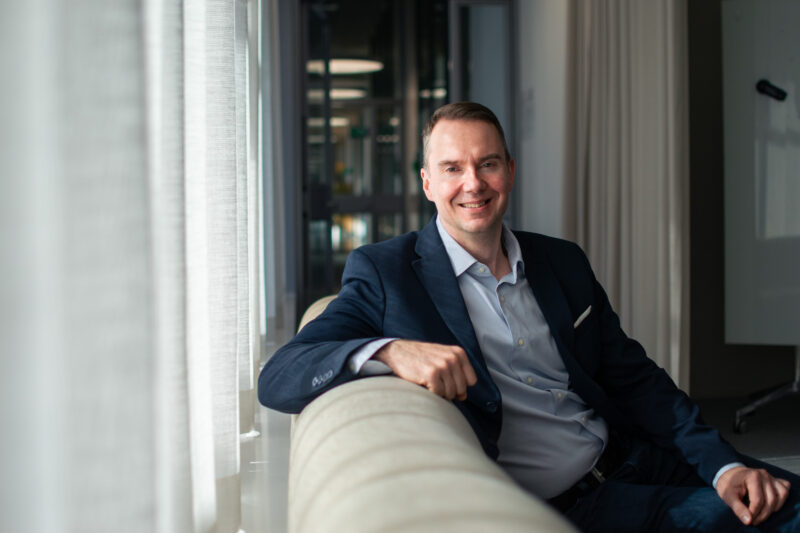
“AI is changing how services are sold and purchased. It is not simply about getting the work done faster. The entire way professional services are delivered is changing,” says Janne Rekonen, Senior Vice President responsible for Sofigate’s ServiceNow Platform business.
According to Rekonen, customers are already asking how AI should be reflected in the pricing of services. If the same work can be done faster and more efficiently, should that also change what the customer is buying? Increasingly, customers also expect the efficiency gains brought by AI to be reflected in contracts.
This shift presents a challenge for service providers. If the customer is buying an outcome rather than a certain amount of work, the provider needs to be much more precise in assessing what can be promised, how the solution will be delivered and within what timeframe.
It also changes how risk is shared. In an hourly billing model, much of the risk remains with the customer. In an outcome-based model, the provider must be able to stand behind its service promise and take responsibility for delivering the agreed outcome. For the customer, this means a clear service promise and a predictable, fixed-price service.
Outcomes are not promised by AI, but by experience
According to Rekonen, this is precisely where many discussions about AI remain too superficial.
AI alone does not make outcome-based thinking possible. It requires years of accumulated experience, productised delivery models and a sufficient understanding of how different industry projects work in practice.
At Sofigate, this experience has been built through more than one thousand five hundred ServiceNow projects. Rekonen says it’s this breadth of project and industry expertise that makes it possible to productise delivery based not on assumptions, but on operating models that have been tested and measured in practice.
“When a builder who has built dozens of houses estimates the foundations for a 100-square-metre house, they do not have to guess the amount of work from scratch every time. Experience already gives them a good sense of how much time, expertise and resources the work will typically require.”
The same applies to ServiceNow deliveries. Sofigate has extensive expertise in how different projects progress, where the biggest bottlenecks arise, where AI can bring the greatest benefits and what can realistically be promised to the customer.
Sofigate’s new ServiceNow AI Factory service model is built on this foundation. AI supports the entire service lifecycle, bringing productised operating models and expert knowledge together as a single whole.
Towards an industrialised operating model
“The greatest benefit of AI does not come from automating an individual task. The real benefit comes when the entire operating model changes,” Rekonen says.
According to him, organisations are moving from individual AI experiments to the next stage. Standalone AI agents can streamline work tasks, but the real benefit only emerges when AI is built into the entire service, from design and implementation to ongoing services. This turns individual successes into a repeatable way of working.
Rekonen describes this shift as industrial. The term may sound surprising in the context of professional services, but he believes it captures the essence of the change.
This does not mean turning expert work into an assembly line. In this context, industrial means identifying and productising best practices so that every delivery can be carried out at scale and to a consistent standard. When routine work is standardised, experts can spend more time on the areas where they create the most customer value, such as quality assurance.
“Our work is increasingly shifting towards understanding the customer’s business needs, defining requirements, validating AI-generated solutions and leading change. That is the part of our work that is growing in importance.”
Standardisation frees up time for business value
As efficiency increases, the benefits are shared between the customer and the service provider. The customer can achieve more with the same investment, while the service provider has an incentive to continue developing its operating model as greater efficiency benefits both parties. The aim is to increase the productivity of ServiceNow services by up to 30 per cent.
According to Rekonen, the ServiceNow platform provides a wide range of ready-made operating models and capabilities on which customer-specific solutions are built. In practice, only around 20–30 per cent of the overall solution needs to be tailored to the customer’s needs. The key, therefore, is not to spend time building functionality that is already available, but to focus expert knowledge on the areas that create measurable business value for the customer.
“Proven operating models free up our time to understand the customer’s business, drive change – and focus on the solutions that truly differentiate the organisation from its competitors.”


AI makes it easier to build, but that makes choosing harder
Who benefits from AI: your company or your service partner?