AI will not transform business. People will.
Three out of four organisations are still using AI mainly to automate existing tasks. Christian Cedercreutz sees the danger: leaders may mistake productivity for transformation. The real value starts when AI is brought into the whole value chain – and people lead the change.
According to our AI Playbook, 73% of organisations are still mainly using AI agents to automate existing tasks, rather than redesigning work and processes.
For Christian Cedercreutz, our new Business Executive, Business and Technology Transformations Sweden, that is where the risk begins.
“The value does not start with technology. It starts with business,” he says.
AI has already reached the experimentation phase. Companies have tested tools, built pilots and had the inspiring discussions. Now the question is whether AI will actually change the business.
Individual productivity is not transformation
Cedercreutz has worked through several major technology shifts: the internet, cloud, analytics, SaaS and earlier waves of AI. This one, he says, is bigger.
“AI affects everything in how companies operate,” he says.
So far, much of the discussion has focused on individual productivity. People use AI to write faster, search better, summarise more efficiently or automate small tasks. Useful, yes. Transformation, no.
“Now everyone is aware of AI. Many companies have tested it. The question is: how do we realise the value?”
That value will not come from adding AI on top of old work and hoping the business changes by itself. It comes when AI is connected to growth, operating models, workflows and measurable outcomes.
“If AI is only used to make existing tasks quicker or cheaper, the organisation may never reach the real value.”
Silos are the old season
The next phase is not about scattered AI agents. It is about digital workers: autonomous digital colleagues embedded in workflows, roles and value streams.
Cedercreutz understands why companies start with narrow use cases. That is how new technology often enters organisations: choose a limited scope, test it, see what happens.
But the impact multiplies only when leaders open the whole workflow.
“The value for the company and the business process is multiplied when the whole value chain is opened and agents start talking to each other.”
That requires companies to break something many still protect: silos.
“Many people still think the silo is their value. They think: if I don’t share this data, I increase my own importance. Technology doesn’t think like that.”
AI needs data to move across the organisation. Internal and external data. Structured and unstructured data. Good data, connected horizontally.
“If poor data goes in, poor results come out.”
Not a game of solo players
Digital workers may outnumber humans in many organisations within the next few years. Some leaders may find that unsettling. Cedercreutz finds it inspiring.
“It sounds fantastic from the perspective that, as a company and as a person, I can become much more effective if I have a technology army around me.”
But a technology army does not remove leadership. It makes leadership more important.
“The solo players who only want a feather in their cap will not get the full value from a digital workforce. The real opportunity is helping the whole organisation perform better.”
That requires clearer roles, better measurement and stronger leadership. People need to feel that the change brings them something good: learning, recognition, better work, more pay, less friction or new opportunities.
“We need people on board. Because AI will not transform business by itself. People will.”
Do not outsource this to IT
Decisions about digital workers belong to business leadership. Their roles, responsibilities, collaboration with humans and business value cannot be owned by IT alone.
Cedercreutz does not argue that companies should throw everything old away. Existing systems, investments and processes still matter. Leaders need to protect what works, improve what can be improved and build from there.
But they must also challenge their routines.
“As humans, we are so stuck in our routines. If you run ten kilometres twice a week, you probably take the same route. It is surprisingly difficult to even change direction.”
That applies to business leaders too. Their job is to lead others, but who helps them think outside the box?
“Business leaders need someone to spar with them, to make changes that are ambitious but still manageable in terms of risk. That is what we and the Playbook are here for.”
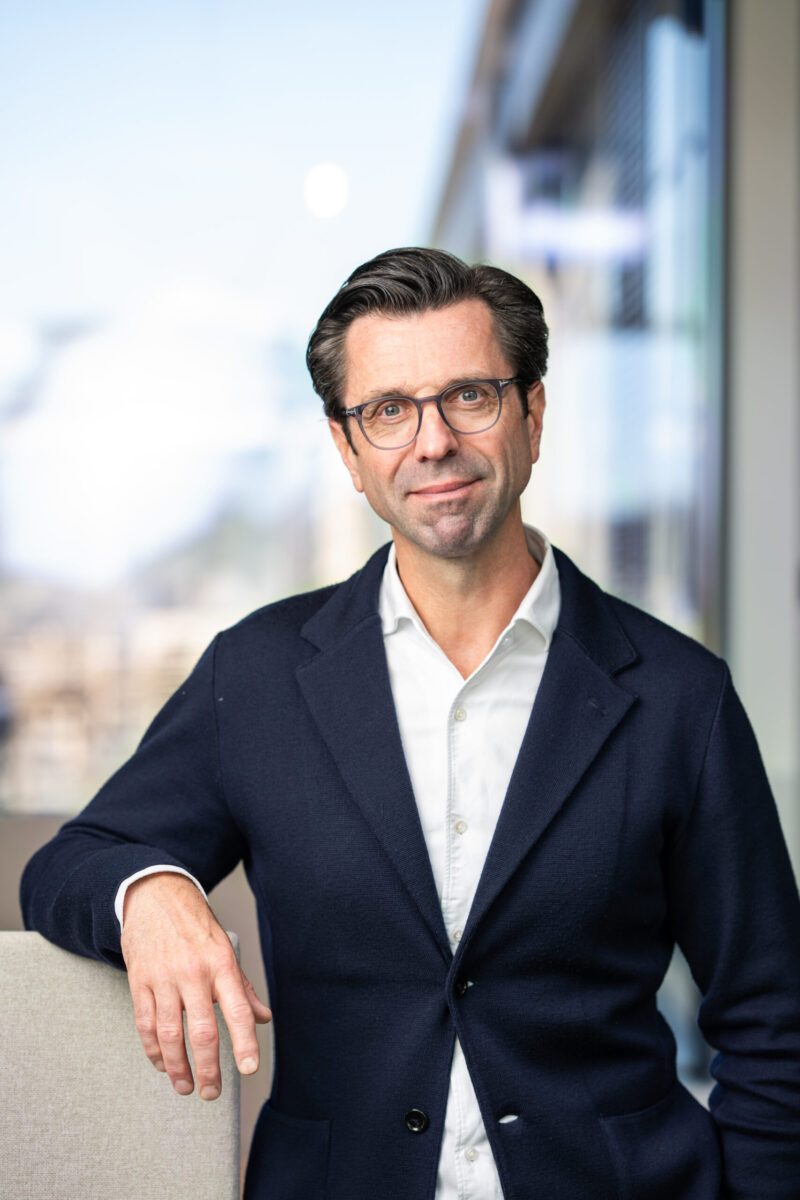
About the author:
Christian Cedercreutz is Business Executive, Business and Technology Transformations Sweden at Sofigate. His background includes senior leadership roles at IBM, M-Brain, NetNordic and Pedab, where he most recently served as Managing Director of Pedab Finland.
He joined Sofigate in June 2026 to lead the Business Transformation unit in Sweden – a role that sits exactly where he believes AI value must now be created: between business ambition, operating models, people and technology.

Companies are looking for AI-era talent using old-world measures
From hours to outcomes: Why is AI changing the rules of professional services?