Companies are looking for AI-era talent using old-world measures
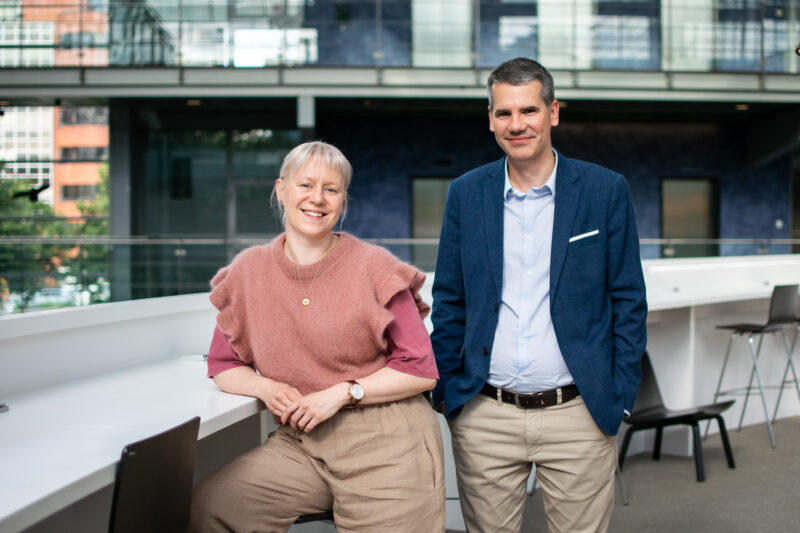
Companies need curiosity, fresh perspectives and the ability to challenge established ways of working in the age of AI. Yet young people are still rewarded for experience and for how much they already resemble fully formed experts. Sofigate’s Jawahir Ahmed and Olivia Krekula ask whether recruitment is screening out the very people who think differently – the people companies now need.
Imagine the twenty-something you being dropped by a time machine into today’s job market. Into fierce competition where companies are replacing entry-level work with AI and hundreds, if not thousands, of candidates are applying for a single vacancy.
What would make you stand out? Would you even make it to an interview to demonstrate the potential you later built your career on?
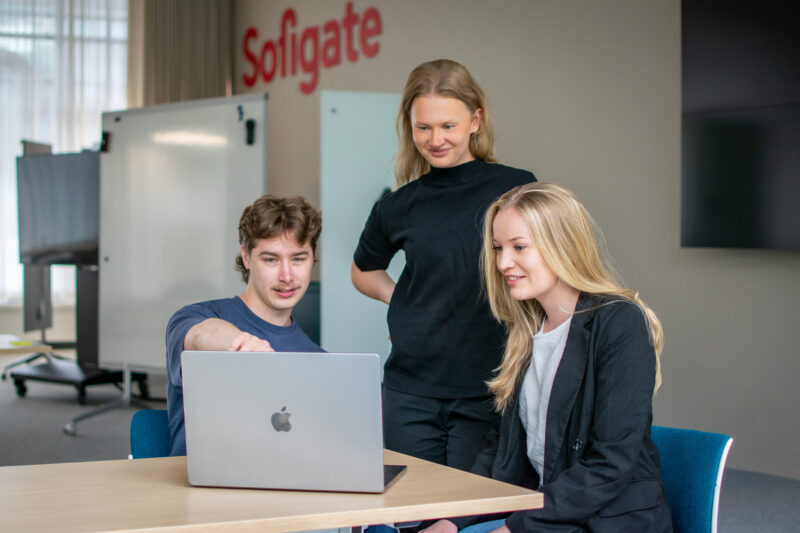
Six months ago, Sofigate hired six young people at the start of their careers to explore whether AI could be part of the solution and help others get a foothold in working life. They spoke with more than 100 young people on the threshold of working life and 15 experts and built four AI agents to support job seeking based on their findings.
“We found that although AI makes it easier than before to produce job applications, standing out in the job market is becoming more difficult. The biggest barrier to entering working life is how young people get the chance to demonstrate what they can do at a time when traditional junior career paths are undergoing profound change,” says Olivia Krekula, one of the six young people involved in the experiment.
Companies want fresh thinking – but hire experience
One contradiction kept recurring in the team’s discussions with young people. Companies need new perspectives and people who can challenge established ways of working.
“In recruitment, however, young people are often judged by how closely they resemble fully formed experts,” says Jawahir Ahmed, another member of the team.
When companies receive huge numbers of applications and some candidates already have more experience, the choice often falls on those with more experience. At the same time, many talented candidates are screened out before they ever have the chance to show what they can really do.
“Young people repeatedly told us that if they could just get the opportunity to demonstrate their skills and personality, their chances would immediately improve,” Krekula says.
The problem, then, is not only what a young person can do, but whether anyone ever gets to see it.
“Visibility has become the new career currency. For many young people, all it takes is a recruiter who sees them – and an organisation willing to take the so-called risk of hiring a young person,” Ahmed says.
The age of misfits
One particularly thought-provoking idea emerged from the experiment: the age of AI could be the age of the “misfits”, or people who think differently.
Ahmed says she had already wondered when she was younger whether our society sometimes confuses obedience with intelligence.
“School and traditional working life have rewarded the ability to grasp the system quickly, use it well and produce the right answers. AI is now superior at precisely those things. That is why the AI-era workplace needs people who ask why, experiment before they have a perfect plan, connect things the organisation has never connected before, and who can live with things being unfinished,” Ahmed explains.
Lack of experience is no longer simply a drawback. It can also have business value.
“When a young person challenges familiar ways of working, the first reaction may be that they do not yet understand the business. Sometimes that is true. But sometimes everyone else has been inside the process for so long that they no longer notice how rigidly things are being done,” Ahmed says.
AI turns curiosity into a capability
Krekula and Ahmed say AI also lowers the threshold for young people to act amid uncertainty. In the AI era, curiosity becomes a practical capability.
“You don’t have to know or master everything before the first experiment. You can bounce an idea around with AI and test it. It becomes easier to take on more responsibility early in your career when you can build the first idea or outline with AI and develop it from there,” Krekula says.
Krekula describes her school-age self as conscientious, well-behaved and rule-following. AI has helped her break away from the need for perfection.
“Everything doesn’t have to be perfect and fully thought through before you can show it to others. Feedback allows you to develop it into something better more quickly.”
At the same time, both Krekula and Ahmed warn against outsourcing our thinking to AI. The four agents built during the experiment help young people identify their strengths, articulate their skills, prepare for interviews and discover opportunities beyond advertised vacancies.
“Their purpose is not to think for young people, but to strengthen their ability to act for themselves,” Krekula says.
Don’t optimise your future senior talent away
Recognising a young person’s potential is not simply a matter of teaching applicants to sell themselves better. Ahmed also places responsibility on companies.
She would boldly bring juniors closer to real problems and decision-making: giving them opportunities to observe, ask questions, experiment and gradually take on responsibility.
“If a company optimises junior roles away in the name of efficiency, this quarter’s work may perhaps be done much more cheaply – but at the same time, future expertise becomes more expensive,” Ahmed warns.
Krekula raises another important question: if young people are not hired and developed, where will the senior professionals of the future come from?
In the age of AI, that question may become even more important for companies. When a machine can produce a convincing answer ever more easily, a person’s value may no longer lie in always having the answer ready.
“The cheaper the answers become, the more valuable the people who ask questions and challenge assumptions become. The AI era needs young people who think differently,” Ahmed concludes.
Want to know more?
Download the experiment’s final report.
Experts:
Jawahir Ahmed was responsible for developing user-centred AI solutions to support young people in their job search as part of Sofigate’s Impossible? Possible! experiment. Ahmed has a background in automation and robotics and is interested in how technology can strengthen people’s agency in working life. She now works in Sofigate’s Salesforce business.
Olivia Krekula led the practical implementation of Sofigate’s Impossible? Possible! experiment and was responsible for keeping the project moving forward. Krekula has a Master’s degree in business and is interested in developing working life and helping young people build career paths of their own. Following the experiment, she joined Sofigate’s project management team.

From hours to outcomes: Why is AI changing the rules of professional services?
Forget the perfect CV. Something else matters more when job hunting in the age of AI