Your next team member might not be human. Are your managers ready?
AI agents need managers too. As digital workers become part of the workforce, organisations must rethink how they are led, governed and held accountable.
At the moment, most organisations are focused on building AI agents. They count the number of new agents and track how many employees use AI in daily work. Those metrics may be useful in the early stages but reveal little about the actual value AI creates.
According to Berit Dommerby Clausager, Head of Transformation Services at Sofigate Denmark, organisations need to start focusing on business outcomes. “The goal is not the number of agents. The goal is the value produced,” she underlines.
As AI evolves from assistants into digital workers that actively participate in business processes, more fundamental questions emerge. How should digital workers be governed? Who is accountable for their actions? And what does leadership look like when some members of the team are no longer human?
Stop optimising. Start rethinking work.
The conversation around AI often starts with efficiency. Organisations look for ways to automate tasks and improve productivity within existing processes. While those benefits matter, Dommerby Clausager believes the bigger opportunity lies elsewhere.
Digital workers create value when organisations stop focusing on individual agents and start looking at work across the business as a whole. Instead of asking what can be improved, leaders should ask what becomes possible when capacity is no longer the main constraint.
“What level of service could we achieve if we had unlimited resources?”
The question is provocative, but it illustrates an important point. Digital workers create an opportunity to rethink operating models rather than simply optimise existing ways of working. Sofigate explores this theme further in its There is no more work without AI playbook, which examines how to move from AI pilots to building and leading a digital workforce at scale.
The organisations that create the greatest value will not necessarily be those with the highest number of digital workers. They will be those that use them to rethink how work gets done.
The shift from assistance to execution
One of the biggest misconceptions about AI is that a digital worker is simply a more advanced chatbot.
The distinction matters. Chatbots help humans by providing information. Agents can support increasingly complex tasks and workflows. Digital workers execute work and deliver results. The moment AI moves from supporting work to performing work, governance and accountability become business issues.
According to Dommerby Clausager, as the use of AI grows, different digital workers often produce different outcomes, creating confusion rather than efficiency. The real challenge begins when digital workers start making decisions and executing work on their own.
“Imagine the difference between one team leader making a poor decision and 500 digital workers making the same poor decision.”
At that point, the question is no longer whether mistakes happen, but how quickly they can spread across the organisation.
AI agents need managers too
The need for governance is widely discussed. What receives far less attention is what governance actually looks like in practice. If digital workers are becoming part of the workforce, somebody needs to manage them.
“Building an agent is not difficult. Creating value from it is,” says Dommerby Clausager.
According to her, organisations should focus on five areas.
First, digital workers need clear outcomes. Leaders must define what success looks like and, most importantly, when decisions should be escalated to humans.
Second, they need clear boundaries. Rules are needed for what digital workers can access and what authority they have to act independently.
Third, performance needs to be managed continuously. The focus is on outcomes rather than activity.
Fourth, digital workers require continuous improvement. As business requirements change, the surrounding system must adapt as well.
Finally, somebody must remain accountable. If a digital worker makes a bad decision, the issue is rarely the worker itself. More often, the problem lies in how the system was designed, governed or monitored.
Leadership is entering a new phase
One challenge is that organisations are entering largely uncharted territory. There is yet little real-world experience of managing digital workers at scale, and many leadership and governance models are still being developed.
Dommerby Clausager believes organisations will need to answer practical questions such as how many digital workers can one person manage. While there is no definitive answer yet, she suggests that 20 to 30 may be a realistic number, depending on the complexity of the work and the outcomes expected.
“The question is not only how many digital workers one person can manage. It is also how many different types of outcomes they can effectively oversee.”
Traditional leadership capabilities such as coaching and people development remain essential. At the same time, leaders need a stronger understanding of how hybrid teams of humans and digital workers operate.
For her, one capability stands above the rest: system thinking. Managers need to understand how digital workers fit into the wider system, while recognising where human judgement remains essential.
What success looks like
The organisations that succeed will not be those with the most digital workers. They will be those that learn how to integrate them into operating models, governance structures and everyday decision-making.
As digital workers become part of the workforce, leadership teams face a new challenge: how to lead them.
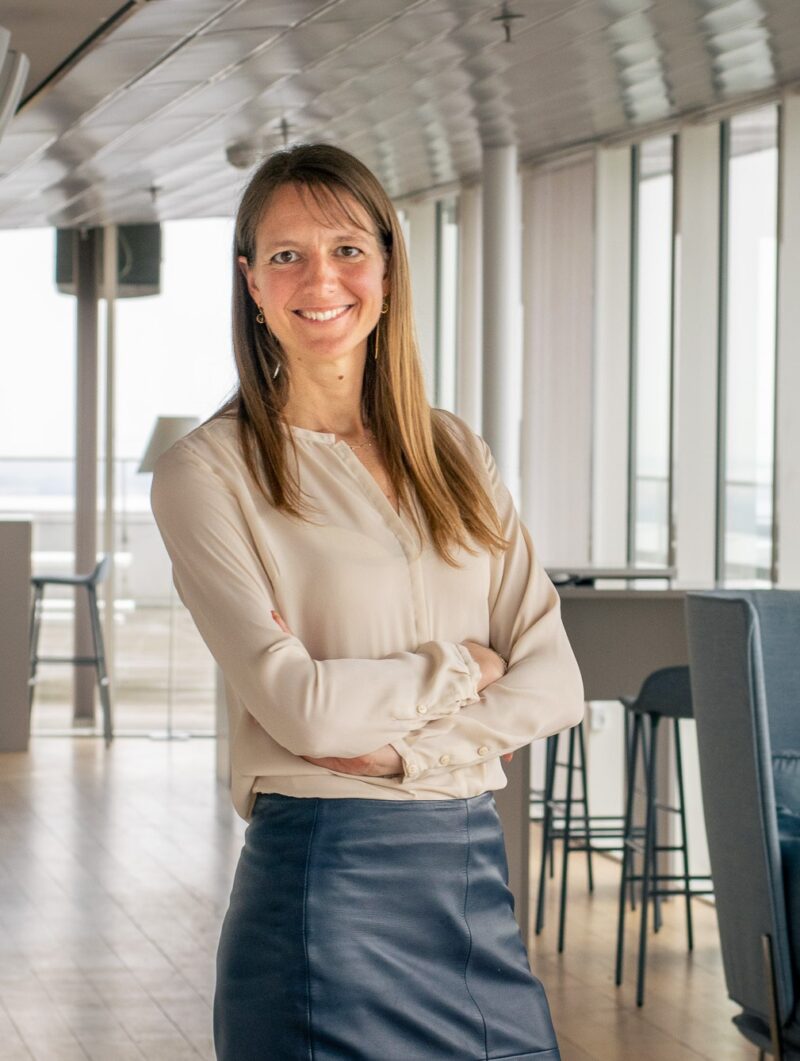
Berit Dommerby Clausager is Head of Transformation Services at Sofigate Denmark. She works with business transformation, operating models, governance, AI strategy and ServiceNow-enabled transformation initiatives. Her current focus includes helping organisations rethink operating models and governance as digital workers become part of everyday business operations.
Download the playbook: There is no more work without AI
Would you like to read more about how digital workers can be led, scaled and put to work in business renewal?
Companies are looking for AI-era talent using old-world measures

From hours to outcomes: Why is AI changing the rules of professional services?