Sofigate Summit looks ahead: what happens when AI becomes part of everyday work?
At Sofigate Summit 2026, business leaders and experts looked beyond today’s AI applications to where the development is taking us next. As AI becomes part of everyday work, the conversation is increasingly turning to people: how humans and AI work together, which skills matter most and what organisations need to succeed.
Finlandia Hall was buzzing on a crisp late-November day as more than 700 business leaders and professionals gathered to explore the next phase of Enterprise AI. The main-stage programme ranged from the changing nature of work to AI governance, human creativity and collaboration between people and AI agents. These themes were brought into practice through customer cases, panels and discussions in the afternoon breakout sessions.
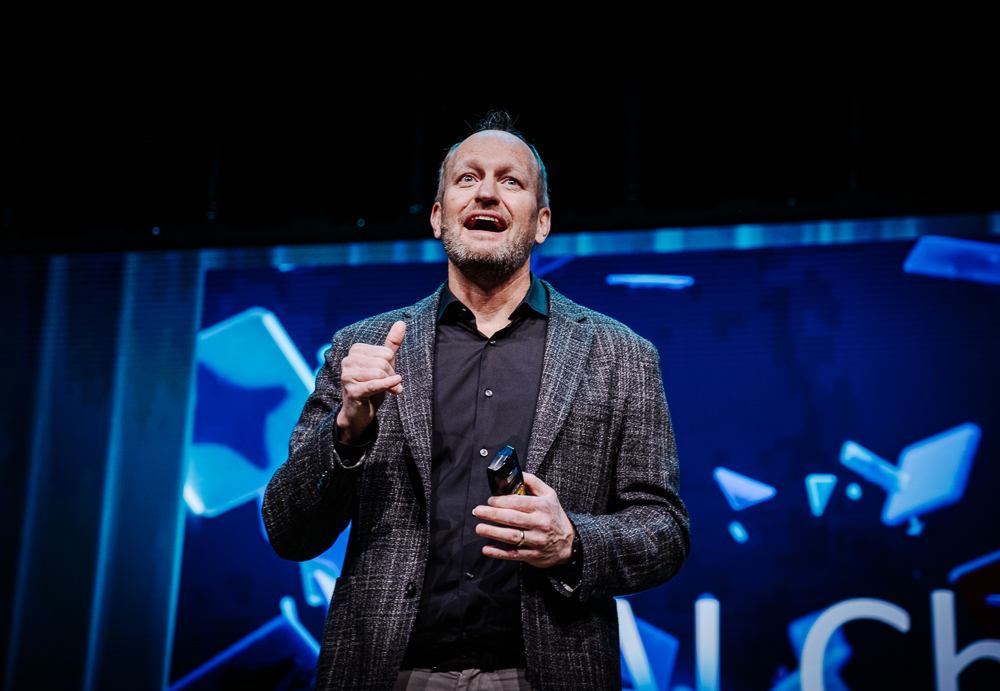
For Sami Karkkila, CEO of Sofigate, the starting point was work itself. In his opening keynote, he painted a picture of how AI could reshape knowledge work, much as robotics and automation once reshaped industrial work.
AI will change how knowledge work is done. It’s about humans and AI working together in a completely new way.
“AI will change how knowledge work is done. It’s about humans and AI working together in a completely new way,” says Karkkila.
This also raises a practical challenge. Knowledge work is often complex and far less clearly defined than industrial processes.
“We need to understand how knowledge work is structured and how people, responsibilities and governance come together. The operating model needs to become part of the work itself and guide how the work gets done,” he continues.
People and AI working side by side
The same question ran through several of the day’s discussions: if AI takes on a growing share of work, what becomes more important for people?
Philip Carter, Group Vice President, Global GTM Strategy at ServiceNow, approached the challenge of scaling AI through the AI Control Tower. As AI agents increasingly work alongside people, organisations need visibility and control over how they are used. His message was simple: governance equals scale.
Critical thinking is one of those human values that we cannot lose.
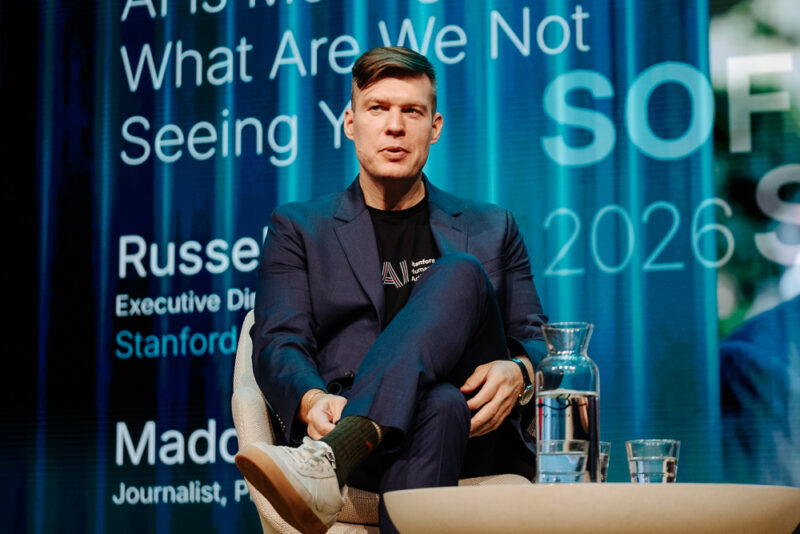
Russell Wald, Executive Director of the Stanford Institute for Human-Centered Artificial Intelligence (Stanford HAI), acknowledged the hype surrounding AI. But behind it, he sees a scientific breakthrough with the potential to fundamentally change how people and societies operate. At the same time, some distinctly human capabilities become even more important as AI develops.
“Critical thinking is one of those human values that we cannot lose. We need to ask deep questions about things,” says Wald.
Curiosity was another capability he returned to. New scientific discoveries and increasingly capable AI may open possibilities that do not exist today, but people will still need the curiosity to recognise those possibilities and decide where to take them next.
This human-centred view was one of the themes that surfaced across the Sofigate Summit. Discussions moved beyond an earlier focus on AI-driven productivity towards questions of judgement, creativity, trust and leadership, and the human role in what comes next.
From individual use to organisational impact
The technology is already part of everyday work for many people. Turning that individual adoption into organisation-wide change is proving harder.
Wald pointed to Stanford HAI’s AI Index research and the gap between the rapid adoption of generative AI and organisations’ ability to use it at scale. People may already use AI to write, analyse and work faster, but organisations are still learning how to turn those individual gains into broader business impact.
Data is one part of the answer. In his earlier main-stage discussion with Karkkila, Wald argued that organisations need to reconsider existing structures and workflows as AI develops. He also stressed the importance of understanding organisational data in much greater depth.
Governance becomes equally important as AI grows more capable. Wald called for greater transparency, stronger ways to evaluate AI systems and better data on adverse incidents. His wider point was that progress and responsibility need to develop together if AI is to deliver its potential.
Turning the future of work into something concrete
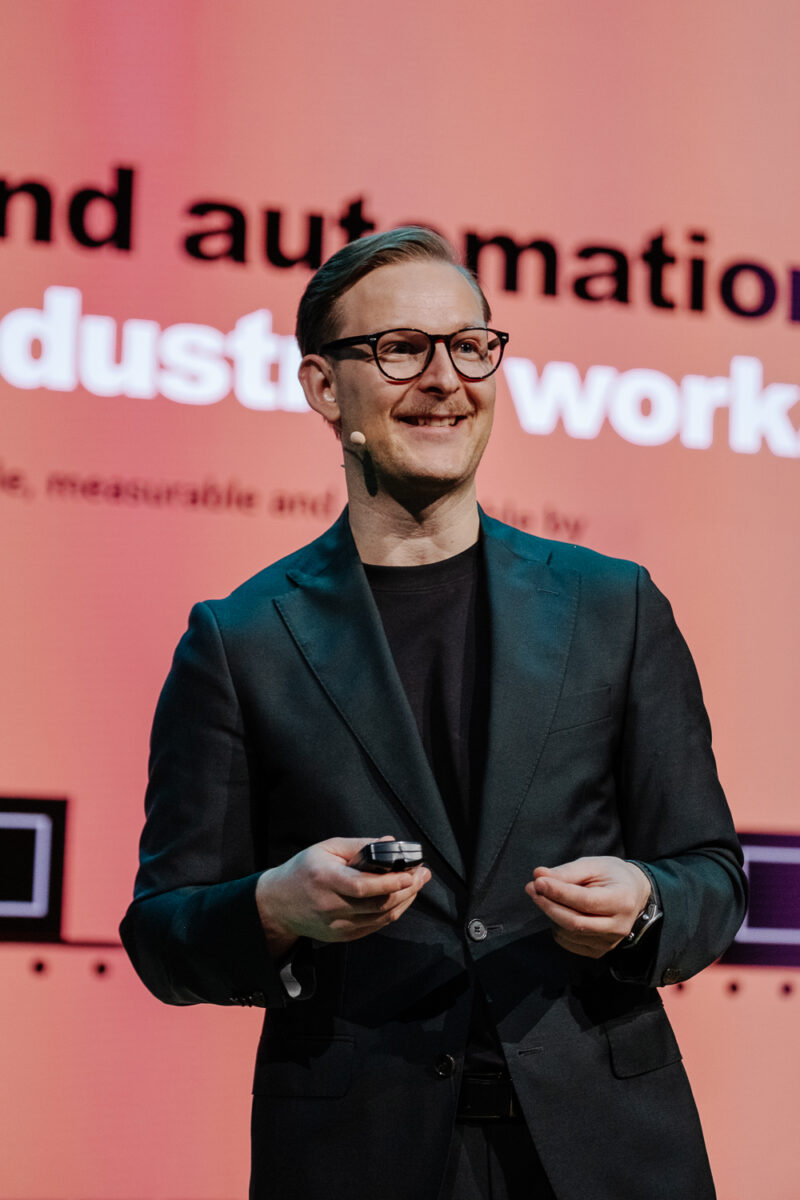
One of the exciting moments at the event was the reveal of Klokworks, Sofigate’s new Knowledge Work Operating System (kwOS). Klokworks brings the operating model directly into everyday professional work, giving people and AI a shared context for how work gets done.
The announcement connects directly with the question raised in Karkkila’s opening keynote: if AI is going to reshape knowledge work, organisations need to understand the work itself and create new ways for people and AI to perform it together.
Sofigate Summit also marked the start of Sofigate’s collaboration with the Stanford Institute for Human-Centered Artificial Intelligence, with Sofigate set to become the first Nordic company to join its Industry Affiliate Program.
AI transformation is fundamentally a leadership transformation.
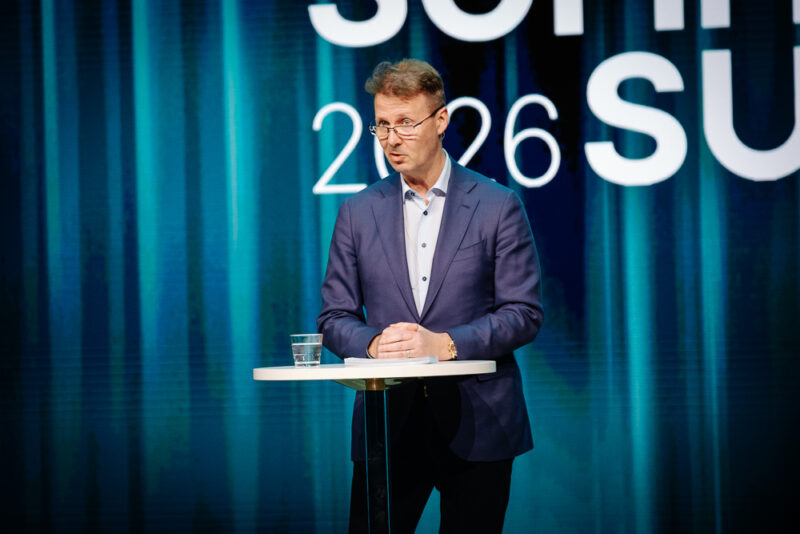
Ultimately, changes in how we work also call for changes in how organisations are led. As entrepreneur and business leader Risto Siilasmaa put it in his closing remarks, “AI transformation is fundamentally a leadership transformation.”
Sofigate Summit 2026 brought together an impressive range of organisations from across the Nordics and beyond, both on stage and at the Partner Hub: Atea Group, Bittium, DNA, Finnish Defence Forces, Fortum, Ilmarinen, Kela, Keusote, King’s College London, KONE, Maki.vc, Mandatum Asset Management, Municipality of Konnevesi, Municipality of Toivakka, NATO Communications and Information Agency, Neste, Nordea, Orion, Plan International Finland, Salesforce, Securitas, ServiceNow, Sitra, Sofigate, SSAB, Stanford HAI, Teira, Tesi, Verso Capital and Wärtsilä.
Across more than 20 sessions, from keynotes and panel discussions to practical customer cases, speakers shared their experiences, challenged conventional thinking and explored what it takes to turn the possibilities of AI into real business impact.
Want to learn more?
We’re glad to tell you how we can help your organisation grow and develop – feel free to contact us!
Sofigate achieves ServiceNow Customer Experience Specialization
Sofigate strengthens Denmark and Norway for next phase of growth